Lysosomal rewiring by Mtb
Our lab studies how Mycobacterium tuberculosis remodels host cell organization during infection, with a particular focus on the endo-lysosomal system and the emerging role of mycobacterial virulence lipids as active modulators of host cell biology. While bacterial lipids have long been appreciated as structural components of the mycobacterial cell envelope, we are interested in the idea that they also function as underexplored signalling effectors capable of rewiring host cellular pathways. While Mtb is well known to arrest the fusion of its phagosomes to lysosomes, we found a surprising and paradoxical result that the infection itself induces the biogenesis of more lysosomes.
We have shown that the mycobacterial surface lipid sulfolipid-1 (SL-1) induces large-scale lysosomal rewiring in infected macrophages through defined host signalling pathways, including activation of the mechanosensitive ion channel TRPV4.
Our lab is interested in understanding the mechanism of lysosomal remodelling, and the cellular logic behind them, i.e what they mean for the physiology of the infected cell, and how they ultimately shape infection outcomes.
Host cell heterogeneity as driver of infection outcomes
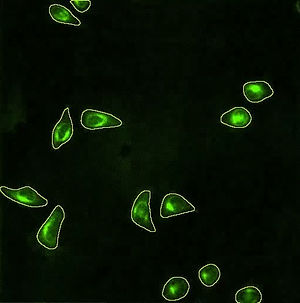
A second major theme of our work is understanding how host heterogeneity and single-cell variation shape infection outcomes. Infection studies have traditionally treated host cells as relatively uniform populations, often overlooking how pre-existing differences between individual cells influence intracellular pathogens. Using quantitative single-cell approaches in macrophage infection models, we showed that variation in endocytic capacity within an isogenic host cell population determines infectivity and intracellular trafficking of M. tuberculosis. These observations suggested the existence of distinct subpopulations of host cells with differing vulnerabilities and consequences for infection — with cells of lower endocytic capacity being less infective but more permissive for intracellular bacterial survival, and cells of higher endocytic capacity being more infective but more stressful for the pathogen.
Building on this, we combined fluorescence-based stress reporter strains of M. tuberculosis with single-cell imaging and sequencing approaches to show that heterogeneity in endocytic capacity is linked to cell cycle progression and generates host cell subpopulations with distinct susceptibility to infection. These differences, in turn, drive bacterial phenotypic diversity within infected cells. We are also interested in how spatial organization within host cells influences bacterial fate, and have contributed to showing that the intracellular positioning of M. tuberculosis is itself a critical determinant of bacterial survival. Together, these studies establish host cell heterogeneity as a fundamental determinant of infection outcome that becomes visible only through quantitative and single-cell approaches.