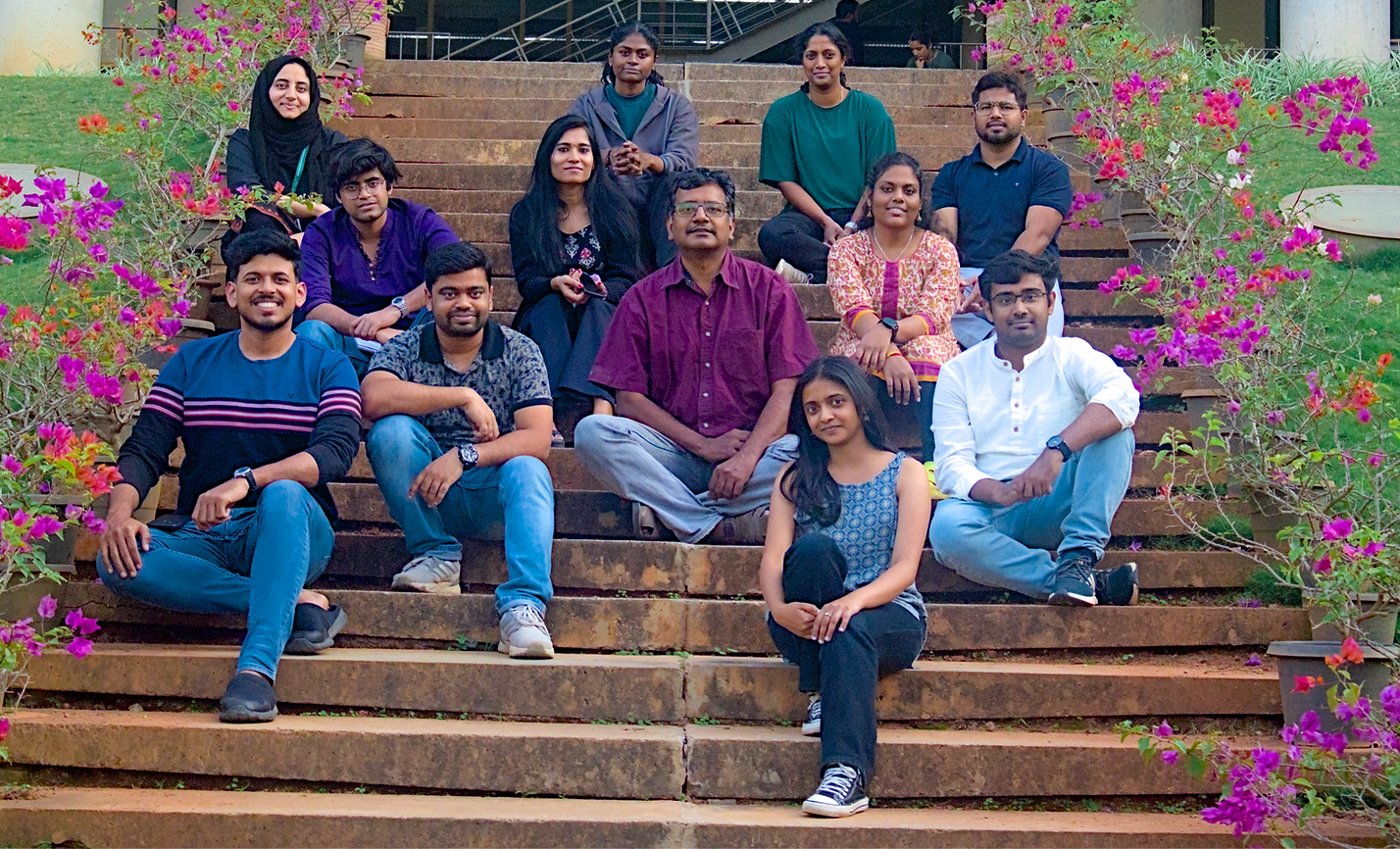


Meet The Team
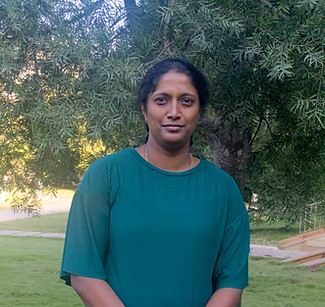
Dr. Sandhya Krishnan
Postdoctoral Researcher
Dr. Sandhya sets a perfect example of inter-disciplinary researcher. After obtaining her PhD from the university of Bern with exemplary work on anti-protozoan drug isolation such as dihydropyranochromones and coumarins. She is now tring to understand mycobacterial pathogenesis using molecular and biochemical approaches.
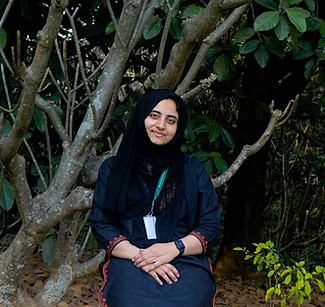
Dr. Shah-E-jahan Gulzar
Bridge Fellow
Mycobacterium bovis BCG vaccination is well known to train immune cells towards heterologous infection pleotropically. To unveil the mechanism of such an effect, Shah-E-Jahan has been working to understand how a mycobacteria-infected cell influences its neighbouring uninfected cell, at the fundamental level.

Neeraja Subhash
Ph.D. Student
Cells with identical genetic make-up poses inherent heterogeneity for fundamental processes such as endocytosis, under identical growth conditions. This heterogeneity influences differential response of macrophages towards infection. Neeraja is trying to understand the factors influencing cellular heterogeneity for endocytosis.
Sahanawaz Molla
Ph.D. Student
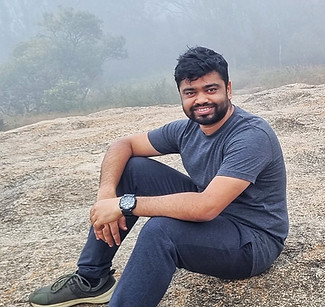
My research focuses on deciphering the phenotypic states of Mycobacterium tuberculosis and examining how these states are shaped by the host immune system in in vivo models. Outside the lab, I enjoy spending time in nature and traveling. I like taking photographs, exploring different cultures and cuisines, and occasionally sketching scenes from the outdoors.

Ibrahim Umar
Ph.D. Student
As reported previously in our lab, Mtb alters lysosomal homeostasis in the infected cell. Ibrahim is trying to understand how this altered homeostasis influences mycobacterial pathogenesis. Employing high-throughput techniques, he is trying to understand disease progression temporally in in-vitro and in-vivo conditions.
Ashutosh Dash
Ph.D. Student
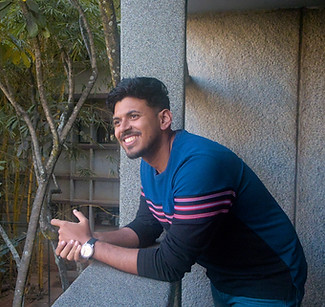
Cellular organelles co-ordinate and interact with each other to execute functional outcomes of the cell. Amongst various factors regulating this coordination, Ashutosh is asking whether the position and spatial organization of organelles have a role? In other words, is there a probabilistic distribution of organelles in the cellular soace? This becomes important in the context of host-pathogen interaction because several cellular processes during pathogen infection are an outcome of interaction because several cellular processes during pathogen infection are an outcome of coordinated interaction of various organelles like endosomes, autophagosomes, and lysosomes.
During his free time, he likes playing chess and basketball, jogging, and hiking.

Barssa Kundu
Ph.D. Student
Macrophages are specialized phagocytic cells. They employ a repertoire of pattern recognition receptors to identify and engulf pathogens. Barssa is trying to understand whether these receptors influence phagocytosis globally, and how.

Urvi Ghatpande
Ph.D. Student
Urvi is interested in developing ex-vivo 3D infection models, to recreate granuloma like environments, and study host-pathogen interactions in Mtb infections, and better capture the complexity of Mtb infection. These models provide a bridge between reductionist cell culture systems and complex animal models for mechanistic and therapeutic studies. By integrating bacterial stress-state reporters, she is trying to investigate mechanisms of drug tolerance and autophagy during infection.
She likes crafting during her free time.

Syed Sarwar Zaman
Ph.D. Student
My research focuses on exploring the effects of Mycobacterium tuberculosis infection on host endolysosomal systems and its influence on cell death. I like to play piano in my leisure times. I also love to paint and read books.
Jahanavi Bommidi
Project Associate 1
About